
On Wednesday 18th April, I attended a meetup about “Researching Culture: a masterclass with Ipsos MORI.” After three years working in the UX industry, I’d somehow never managed to make it to one of the many held in London. Although, to be fair they often sell out quicker than Glastonbury tickets. This time I was quicker off the mark and bagged one of the 100 tickets available.
I chose this event in particular because research is an area of my skill set that I’ve wanted to develop for a while, as this will propel me to the next stage of my career in confidently using evidence gathered to support my design decisions. I also wasn’t going to my first UC event on my own… one of my colleagues (a User Researcher) managed to snap up one of the much sought after tickets, and this was a pleasant surprise. My colleague Sophie was a regular at these events, so it was good to be able to ask her general questions about how everything works and to be able to talk about what we were learning. I had no idea what to expect upon arrival, but the venue seemed moderately contemporary, with white walls, funky coloured stickers to represent the company’s brand, spacious and brightly lit. There were snacks such as crisps and popcorn, water, wine and beer, but most of it disappeared within 10 minutes of me being there (it wasn’t me), helped along by the many researchers and designers no doubt.
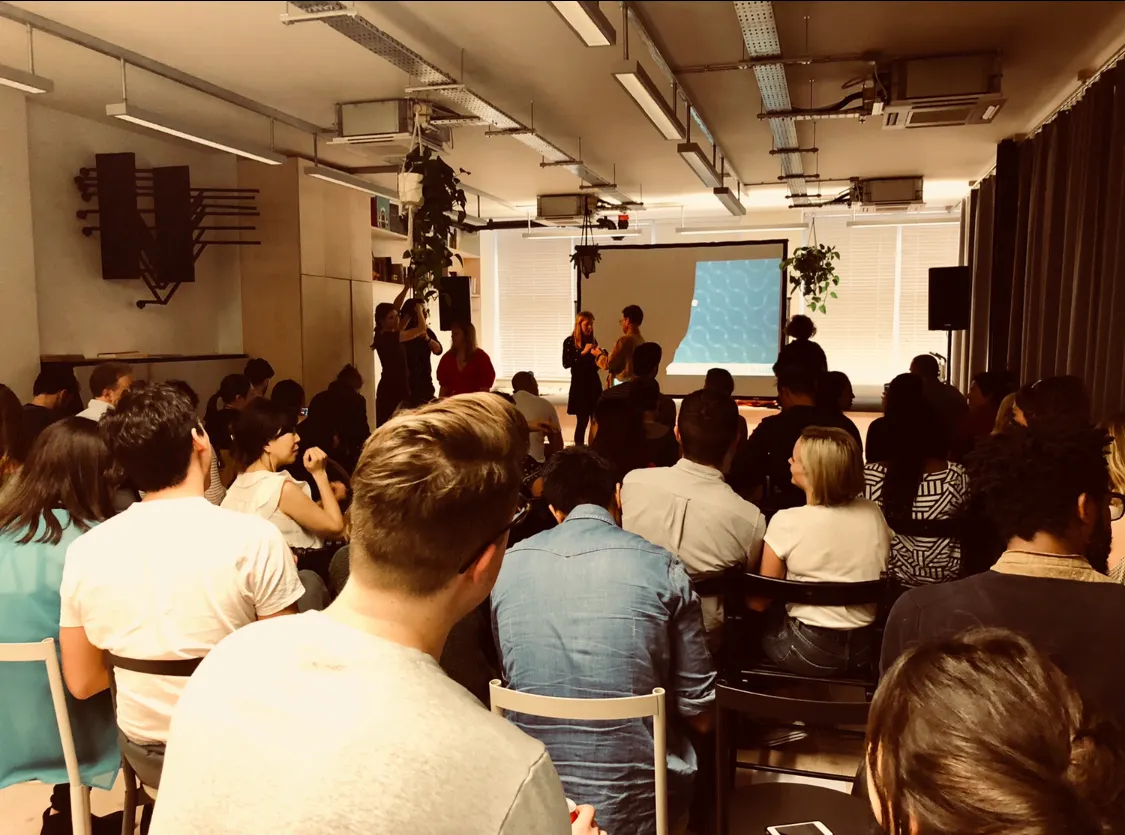
The main speaker was Alma Berliner, an Ethnographic Research Director at Ipsos who spoke alongside her colleague Helle Thorsen, an Anthropologist. The ladies explained that they were currently working on many exciting projects using a full end to end innovation approach, such as the future of digital resourcing, building a new digital advice service, and launching a second new telecommunication offering. Their use of Discovery, Design, Development and Growth looked similar to many other methods I see organisations follow, which I felt works, though was not something very innovative.
They then later went on to show a video of families and their perceptions of cleanliness and helpfulness, to highlight the differences in culture. The first clip showed an Indian family that did not use appliances like washing machines to wash their clothes, as everything was hand-washed in a sink.

The woman washing the clothes revealed she did not know why she did it this way, other than it was the way her mother showed her, and that the same practice had been passed down generation after generation. Later we were told that they also washed these clothes in a bath. As the clip progressed, it showed a wife seeking assistance from her husband to change the bedsheets, in which all he did was stand in one place, holding two corners of the bedsheets without any movement, like a statue. The level of help the wife received, was considered adequate by everyone who had watched it as we were all later asked our opinions, though, to me, she might have had an easier time doing it herself. On the flip side, next, we were shown an American family, with a mother instructing her son to clean the living room solely with Febreze, in which he proceeded to spray excessively, while she sat on the sofa praising him for the “housework” he had done. When it came to her clothes, she showed much more devotion to the results of her clean clothes, fresh out of the washing machine, by not only inhaling them for a long duration of time but by also asking her son to smell the clothes too.
The point I gathered in this was, it is essential to understand your target audience and the products/services you are building for them.
As fancy as it may be, or as popular as the idea may be in certain parts of the world, on the other side of the world, the products/services might be deemed useless. Creating a specific cleaning product in the country the first family came from would have been pointless as it wasn’t standard practice to use name brand products to clean clothes. The American family, however, showed that smell was a significant factor in what some might deem as clean. This cultural difference can significantly affect the design and the user’s experience, for example, things such as a left to right bias in English-speaking countries, assumes readers will start from the left of a page, so creating this UI for someone from the Middle East may not have the desired effect.
The talk has helped refresh what I already knew about cultural research, but it has also helped me to rethink the type of questions and conversations I have with potential users in the future before moving forth with my designs. I would definitely go to another talk because subconsciously I probably learned more than I realised, but also because I will forever be a student of design as people and cultures continuously shift, affecting the way designers approach a new task, you only have to look at companies disrupting their industries like Uber, Airbnb and the top fintech banks.
Follow me to keep in touch
Where I share my creative journey, design experiments, and industry thoughts.


