AI powered financial decision support for people managing multiple income streams
Product
SideStack
Role
Product Designer / Founder
Platform
Responsive web application
Status
Prototype / Ongoing
Year
2026

SideStack is a financial operating system designed for freelancers, contractors and people managing several sources of income.
Rather than simply recording money coming in and going out, SideStack connects project profitability, time, expenses and tax to help users understand which work is worth continuing, what financial impact a decision could have, and how much they should set aside.
Scope of Work
Earning more does not always mean making better financial decisions
Freelancers and people with mixed income can see money arriving across projects, clients and income streams, but that does not automatically tell them which work is financially worthwhile.
Revenue alone hides the effect of time, expenses and tax.
At the same time, tax tools tend to explain what someone owes after financial activity has already happened. SideStack explores whether the same financial data could help someone make better decisions before committing more time, accepting more work or changing how much money they set aside.
Turn financial data into a clearer next step
SideStack is designed around a simple principle.
Financial information becomes useful when it helps someone decide what to do next.
The product brings income, projects, time, expenses and tax context together so users can compare work, understand trade offs and plan ahead from one system.
The goal is not to show more financial information. It is to reduce the amount of interpretation users must perform themselves.

Understanding where existing financial tools stop
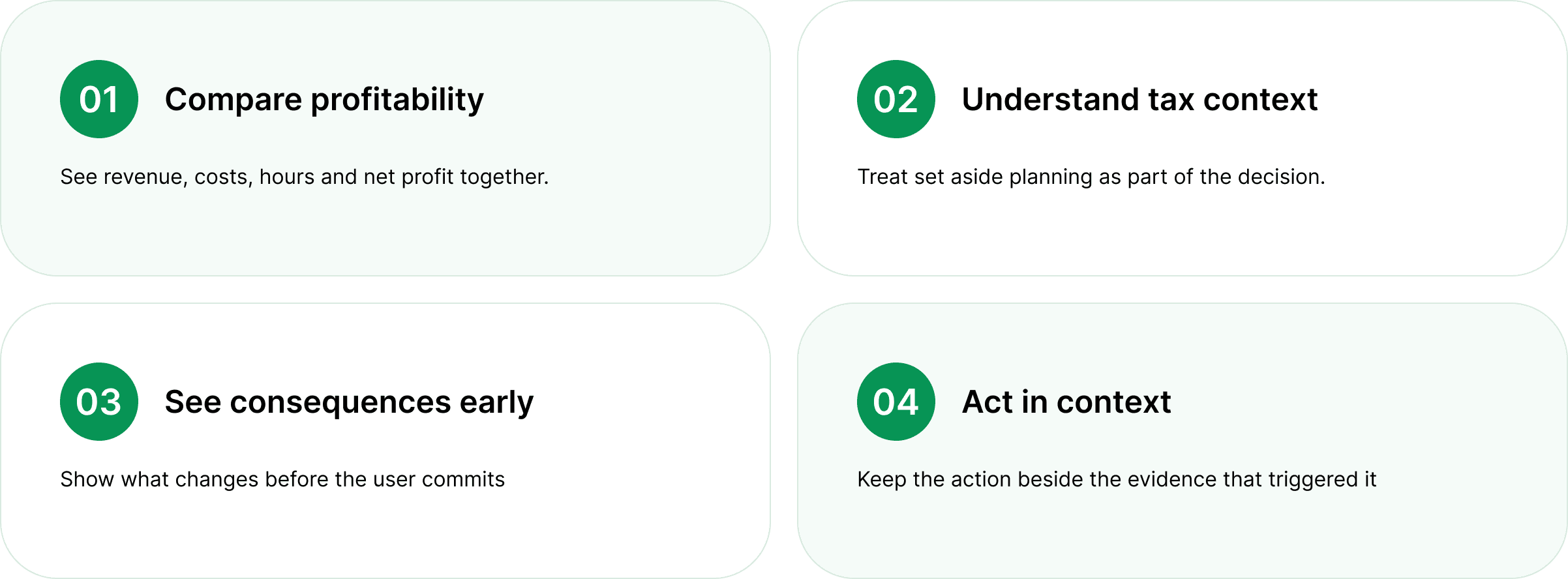
Competitive analysis showed that existing tools handled parts of the problem well, but none connected project profitability, tax context and decision support in one experience.
SideStack’s opportunity was not to replace accounting tools, but to connect profitability and tax into a clearer decision flow.

Two financial problems, one underlying system
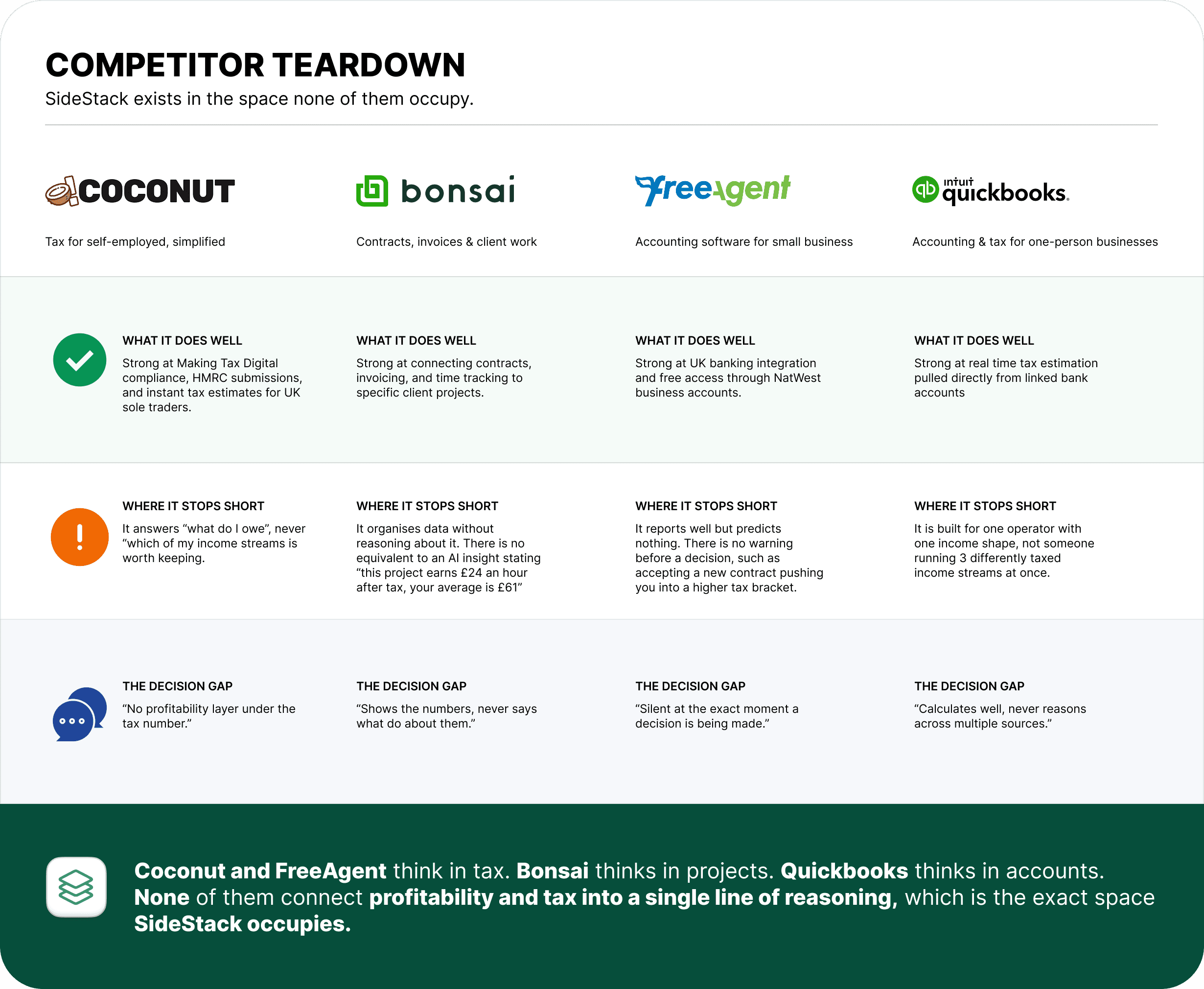
The problem framing led to two primary user types.
The Multi Project Freelancer needs to understand which projects are actually worth their time once revenue, expenses and effort are considered together.
The Hybrid Earner needs clarity on how salary, freelance work and other income sources combine to affect their tax position.
Their priorities differ, but both depend on SideStack understanding income, time, expenses and tax as connected financial data.


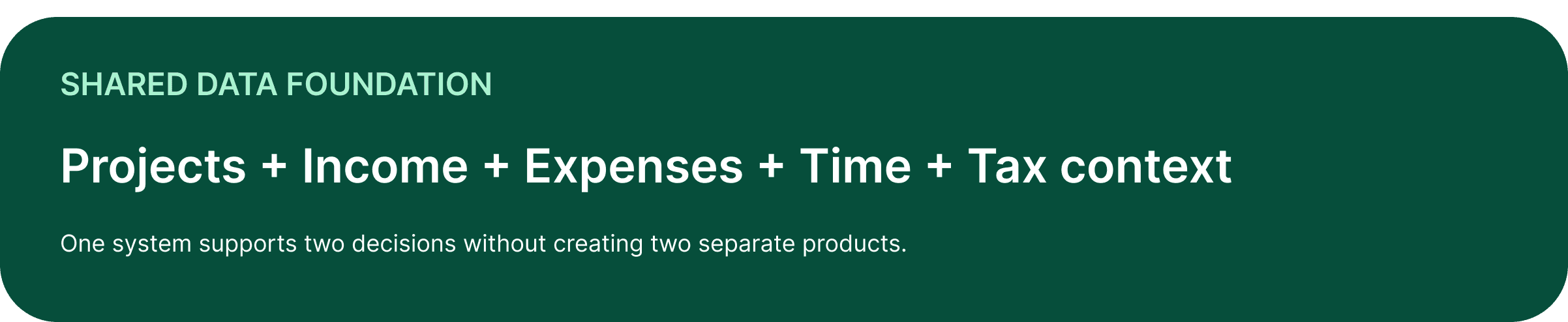
One system, two decisions
SideStack uses the same financial foundation to support two connected decisions: which work deserves more of the user’s time, and how much money they should protect for tax. Keeping both journeys in one system reduces the need to piece together separate financial views before deciding what to do next.
I tested the financial logic before treating the interface as finished
A structured audit covered 9 core screens and 2 end to end journeys. The review checked financial consistency, task continuity, state clarity and responsive behaviour. It exposed terminology problems that polished screens alone would have hidden.


Helping users identify which work deserves more of their time
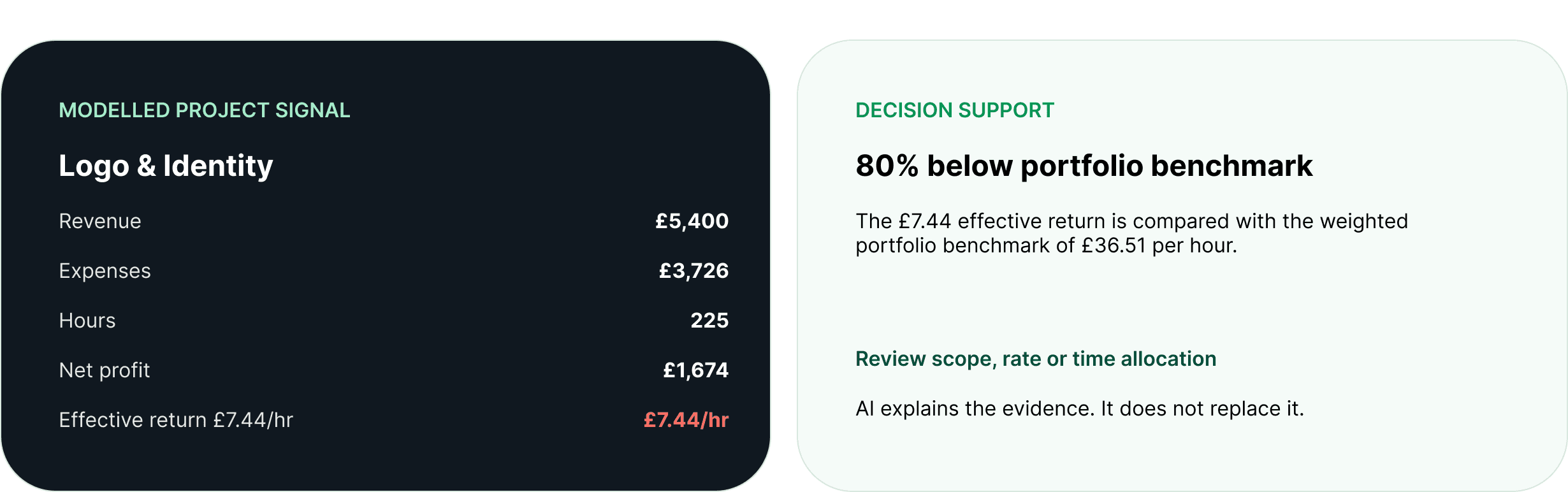
The Decision Loop explores how SideStack could move from identifying an underperforming project to explaining why it is weak and helping the user decide what to do next. Recorded and calculated values stay visible throughout, while the AI explanation and recommendation represent future behaviour to validate.

Showing the tax impact before the decision is made
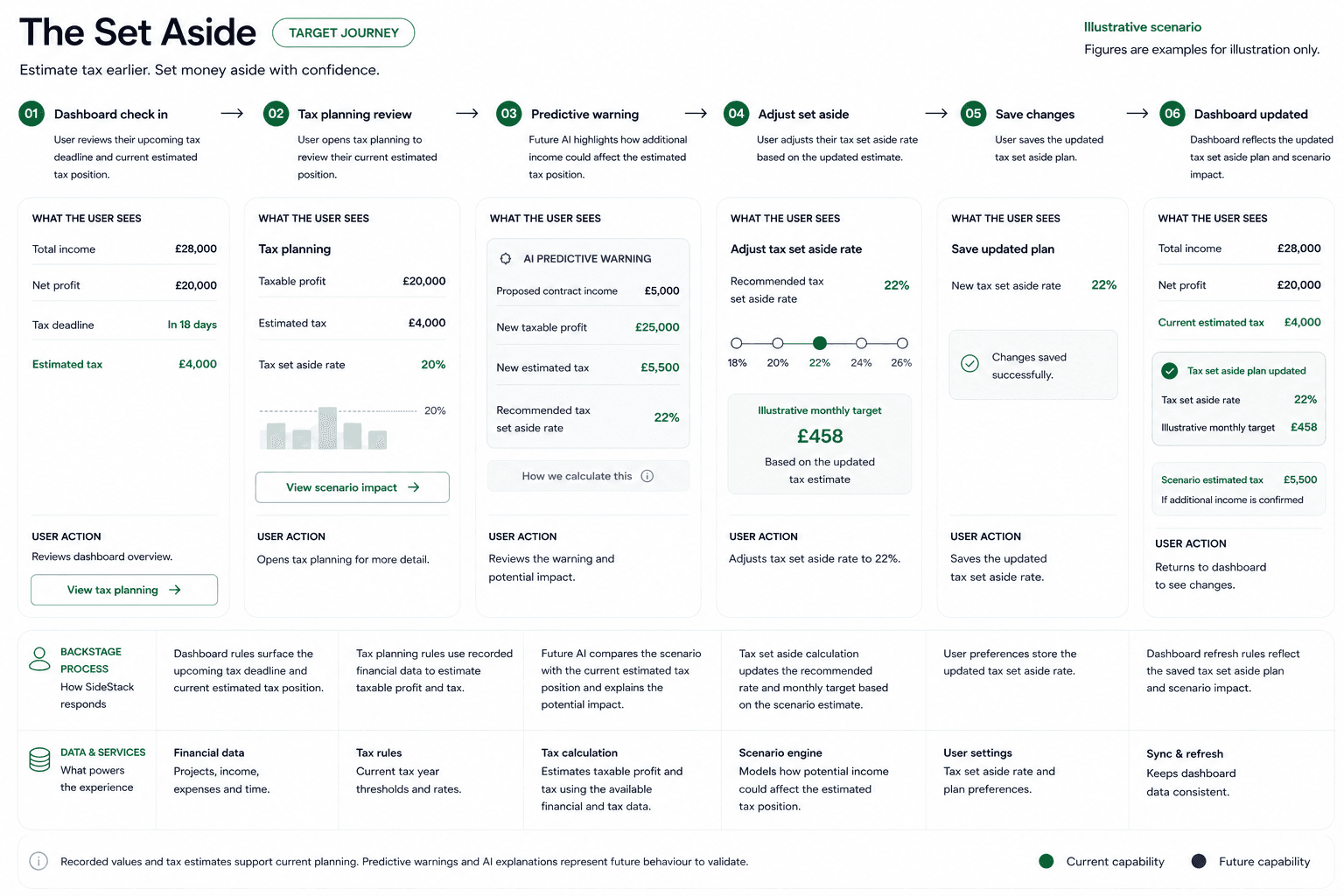
The Set Aside journey uses the same financial foundation to show how changes in income could affect the amount a user chooses to protect for tax. The user can review the planning estimate, adjust the set aside and see the updated position reflected across the product.

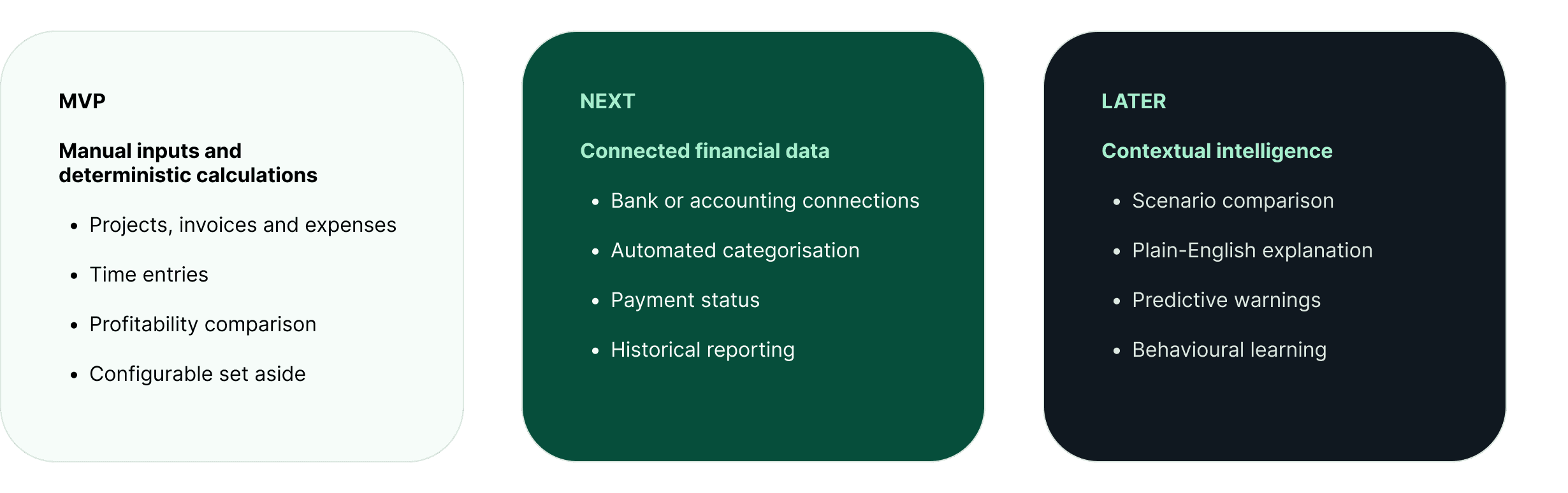
Mapping what needs to happen beyond the interface
The service blueprint maps what the user sees against the system processes and data needed to support each decision. It also separates information SideStack can calculate directly from data that depends on external sources, forecasting or future AI behaviour.


The decisions that shaped the experience
SideStack follows five product principles.
Decide, do not just track
Financial information should lead towards a useful decision rather than ending with a number.
Keep action in context
Users should be able to act where a problem or opportunity appears.
Show cause and effect
When users change something, the resulting financial impact should remain visible.
Connect profitability and tax
The value of work and its tax consequences should be treated as parts of the same decision.
Be honest about uncertainty
Calculated values, forecasts and AI guidance should not all be presented with the same level of certainty.
A financial command centre built around action
The interface keeps the overview, project comparison, set aside planning and reporting connected. Recorded and calculated values use shared financial definitions, while AI recommendations shown in the prototype represent the intended future intelligence layer.


Design system
Built to keep the product consistent as the interface expanded.
SideStack uses reusable foundations and components across desktop and responsive layouts. Semantic tokens control colour, typography, spacing, elevation and states, while shared components cover common interaction patterns such as buttons, forms, cards, navigation, alerts and tables.

Dense desktop information should not simply shrink


The strongest idea was the connection between profitability and tax
SideStack became more focused when project profitability and tax stopped being treated as separate parts of the product. The Decision Loop and Set Aside journey now use the same financial foundation, which makes that connection the strongest part of the product direction.
Show the reasoning without hiding the evidence
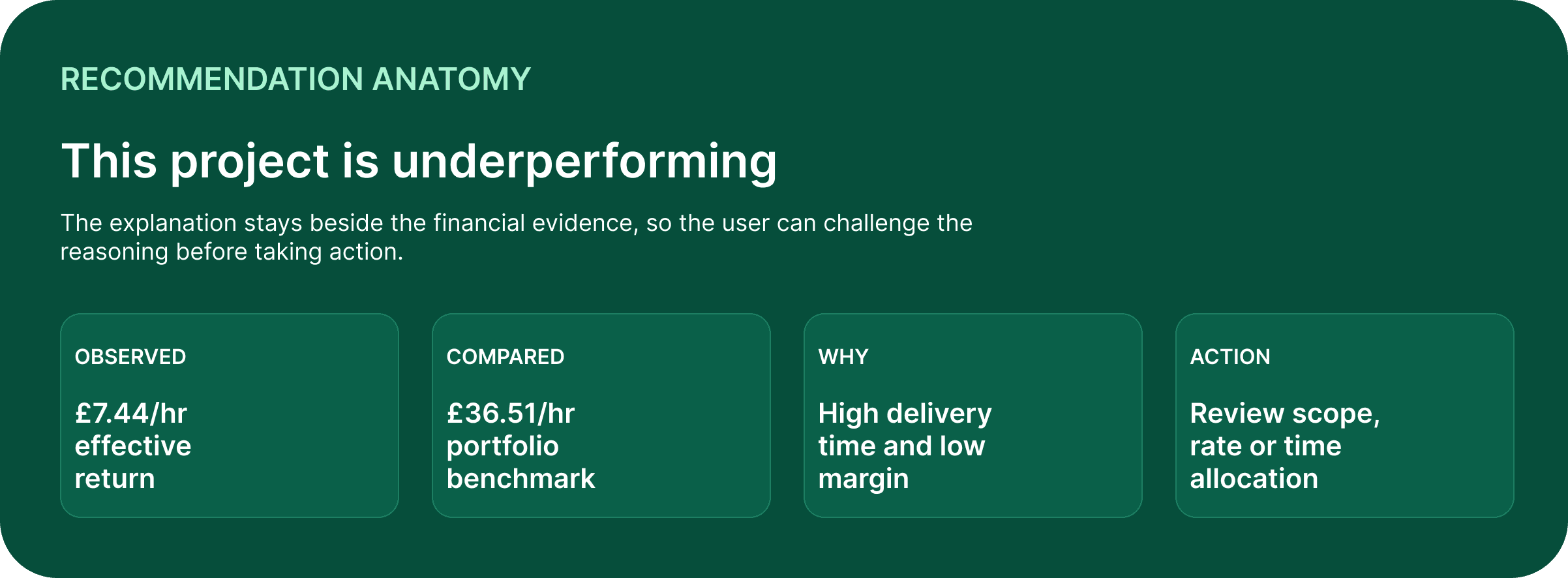
A recommendation must explain what was observed, what it was compared with, why it matters and what the user can do next. The interface should also communicate how certain each type of information is.
Make the status of each number visible


The next step is behavioural validation
The concept is structurally coherent, but it still needs evidence that people understand the reasoning and change their behaviour. The first study should test the two core decisions rather than ask for general feedback on the interface.